
Air heaters https://8ruiyan.com/en/all-air-heaters/ are essential for controlled environments. However, a heater for pill coating is not like a heater for drying paint. For pharmaceutical and industrial uses, the requirements differ drastically. Choosing correctly ensures product quality and safety.
Part 1: The Pharmaceutical Air Heater – Engineered for Purity
Pharmaceutical air heaters deliver ultraclean, temperature-controlled air. They are vital for drug manufacturing, research labs, and critical zones. Their design prioritizes product purity and batch consistency above all else.
Core Requirements & Design:
- Absolute Air Purity: Preventing contamination is non-negotiable. Heaters must have a sealed, cleanable design. They must not introduce particles, microbes, or chemical off-gassing.
- Material Integrity: All wetted surfaces use pharmaceutical-grade stainless steel (e.g., 316L). Surfaces are often electropolished to prevent microbial adhesion.
- Precision & Documentation: Temperature control is extremely precise. Systems must support full data logging for compliance with GMP (Good Manufacturing Practice) regulations.
- Sterilization Compatibility: Many units must withstand clean-in-place (CIP) or sterilize-in-place (SIP) procedures using steam or chemicals.
- Low Turbulence: In laminar flow applications, the heater must not disrupt unidirectional airflow patterns.
Key Applications:
- Heating air for coating tablets in a fluid bed dryer.
- Supplying temperature-controlled air to filling lines in sterile production.
- Providing precise heat for lyophilization (freeze-drying) processes.
- Maintaining conditions in stability chambers and cleanrooms.
Part 2: The Industrial Air Heater – Built for Performance
Industrial air heaters deliver powerful, reliable heat for processes and spaces. They are built for durability and efficiency in demanding environments like factories and warehouses.
Core Requirements & Design:
- Robust Heat Output: Designed to deliver high thermal capacity. They focus on transferring maximum heat energy efficiently.
- Durability Over Purity: Constructed with heavy-duty steel and industrial-grade components. Built to resist dust, moisture, and physical impact.
- Energy & Cost Efficiency: Optimized for low operating costs using electricity, gas, or steam. Payback time is a key metric.
- Process-Focused Control: Temperature control ensures product quality, but tolerances are wider than in pharma. The focus is on repeatability for the specific process.
Key Applications:
- Drying paints, coatings, textiles, or ceramics on production lines.
- Space heating for large workshops, assembly areas, or hangars.
- Providing process heat for plastics molding, food processing, or chemical reactions.
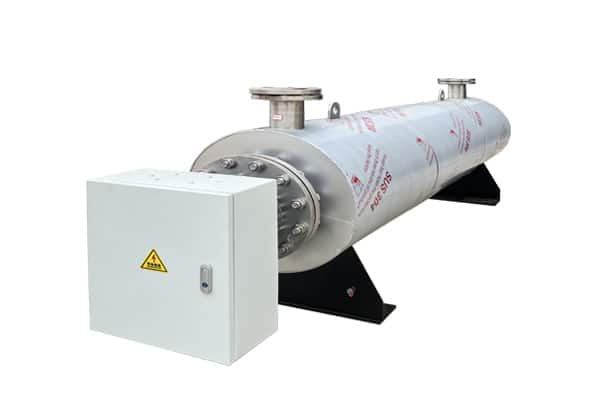
Part 3: The Key Differences at a Glance
| Feature | Pharmaceutical Air Heater | Industrial Air Heater |
|---|---|---|
| Primary Goal | Product/Patient Safety. Ensure drug purity, potency, and sterility. | Process Efficiency & Cost. Ensure throughput, quality, and profitability. |
| Design Driver | Regulatory Compliance (GMP, FDA). Documentation and validation are critical. | Durability & Operating Cost. Robustness and energy efficiency are critical. |
| Material Standards | Pharmaceutical-grade (e.g., 316L SS), electropolished, non-shedding. | Industrial-grade (e.g., 304 SS, carbon steel, aluminum). |
| Air Quality Focus | Aseptic / Contaminant-Free. Must not compromise product or process. | Adequate for Process. May have filtration, but not to pharmaceutical grade. |
| Control & Validation | Extremely precise, with full data traceability for audits. | Reliable and repeatable, with focus on process stability. |
| Cleanability | Designed for CIP/SIP; smooth, crevice-free surfaces. | Designed for easy access and maintenance; may not be fully cleanable. |
| Cost Perspective | High initial cost, justified by compliance and risk mitigation. | Focus on lower total cost of ownership (purchase + operation). |
Conclusion: Matching the Heater to the Mission
The core difference is priority. Pharmaceutical heating prioritizes risk control – a contamination event can cost lives and millions. Industrial heating prioritizes output and cost control – a failure mainly impacts production and profit.
Specifying an industrial heater for a GMP cleanroom is a serious regulatory and safety risk. Conversely, using a pharmaceutical-grade heater in a standard factory is a significant, unnecessary capital expense. Always let the application’s core requirement – be it absolute purity or robust performance – guide your specification. This is the foundation of quality, safety, and smart investment.
For further problems about calendering or vacuum cleaning furnace, please contact our technical team for expert advice.
Whatsapp:86-19106101570
wechat:86-19106101570
email:fob@jsryan.com
 Chinese
  Russian
  Indonesian
  German
  French
  Italian
  Spanish
  Portuguese
  Polish
  Czech
Czech  Turkish
  Korean
  Japanese
  Arabic
  Persian
  Dutch
Dutch  English