
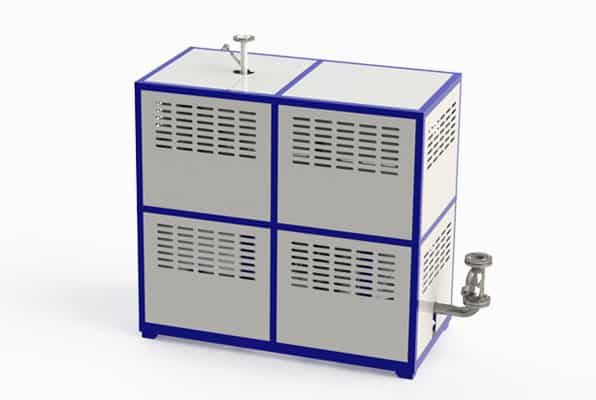
In the world of industrial heating, the Electrical Thermal Oil Heater https://8ruiyan.com/en/all-organic-heat-carrier-boilers/ (also known as an electric thermal fluid heater or electric heat transfer fluid heater) stands out for its precision, efficiency, and eco-friendly operation. Unlike traditional boilers that use water or steam, these systems utilize thermal oil as a heat carrier, operating at low pressures while achieving high temperatures.
However, to ensure optimal performance for your specific application—whether in the chemical, food processing, or rubber industry—you must scrutinize the technical parameters. Here is a breakdown of the critical Electrical Thermal Oil Heater specifications you need to evaluate.
1. Heating Capacity (kW)
The heating capacity is the most fundamental parameter. It determines how quickly the system can raise the temperature of the thermal fluid and, subsequently, your process load.
- Range: Industrial units typically range from 10 kW to over 3,000 kW.
- Consideration: Undersizing leads to slow heat-up times; oversizing can lead to thermal degradation of the oil due to frequent on/off cycling.
2. Design Temperature and Working Temperature
One of the primary advantages of thermal oil systems is their ability to reach high temperatures without high pressure.
- Max Operating Temperature: Standard electrical heaters often reach 300°C (572°F) , while specialized high-temperature models can achieve 350°C – 400°C.
- Precision: Look for the control accuracy. Top-tier units maintain the set-point temperature within a tolerance of ±1°C, which is crucial for sensitive chemical reactions.
3. Thermal Fluid and Volume
The thermal oil acts as the “bloodline” of the system.
- Fluid Type: The heater must be compatible with the selected thermal fluid (e.g., synthetic oil or mineral oil).
- System Oil Volume: This specification dictates the total amount of fluid required. A smaller volume allows for faster response times, while a larger volume provides better thermal stability.
4. Pump Specifications and Flow Rate
The pump is responsible for circulating the heat transfer fluid. If the flow is insufficient, the oil will overheat locally and degrade.
- Flow Rate (m³/h): This must match the heating capacity to ensure proper heat transfer (ΔT).
- Motor Power (kW): Higher viscosity oils or longer pipe runs require a pump with higher head pressure.
- Material: Most pumps are made of cast iron or stainless steel to prevent corrosion at high temperatures.
5. Design Pressure and Safety Valves
Although thermal oil systems operate at atmospheric or near-atmospheric pressure at the expansion tank, the closed loop does experience pressure.
- Heater Coil Pressure: The tubes or heating elements are rated for a specific design pressure (often PN10, PN16, or PN25).
- Safety Features: Ensure the unit includes pressure relief valves, thermal cut-outs, and low-flow protection to prevent coking or burnout of the electric elements.
6. Electrical Data and Power Supply
As these are electric units, the power supply configuration is a key logistical parameter.
- Voltage: Options vary by region, commonly including 220V, 380V, 415V, or 440V.
- Phases: Available in single-phase (small units) or three-phase (industrial units) .
- Power Control: Look for units featuring SCR (Silicon Controlled Rectifier) or solid-state relays for soft-start capabilities and precise power adjustment, which also reduces stress on the electrical grid.
7. Heating Element Material
The heating elements are submerged directly in the thermal oil.
- Standard Material: SS304 (Stainless Steel 304) is common for general applications.
- Corrosive Environments: SS316 or Incoloy are used for highly corrosive environments or when operating at the very top end of the temperature spectrum to prevent scaling and rupture.
الخاتمة
Selecting the right Electrical Thermal Oil Heater requires balancing capacity, temperature, and fluid dynamics. By carefully reviewing these parameters, you ensure a longer lifespan for your thermal fluid, lower energy consumption, and safer operation.
Need a customized solution? Contact our engineering team to discuss your specific thermal fluid heating requirements.
Whatsapp:86-19106101570
wechat:86-19106101570
email:fob@jsryan.com
 Chinese
  Russian
  Indonesian
  German
  French
  Italian
  Spanish
  Portuguese
  Polish
  Czech
Czech  Turkish
  Korean
  Japanese
  Arabic
  Persian
  Dutch
Dutch  English