
High-temperature calcination furnace and vacuum cleaning furnace https://8ruiyan.com/en/all-vacuum-cleaning-furnaces/ are specialized industrial ovens. They serve very different purposes in manufacturing. Understanding how they work and where they are used is key to selecting the right equipment for your process.
How Does a High-Temperature Calcination Furnace Work?
A calcination furnace is designed to heat materials to very high temperatures in a controlled environment. This process removes volatile components, causes chemical decomposition, or changes the physical structure of a material.
A common type is the flash calcination furnace. Here is a simplified breakdown of its operation:
- Feeding & Mixing: Pre-calcined material is fed into the system. It is then mixed with a hot medium (like heated air or gas) inside a special mixer.
- Flash Calcination: The mixture enters the main furnace chamber. The hot medium causes the particles to behave like a fluid (fluidized motion). The actual calcination reaction happens almost instantly in this state.
- Separation & Collection: The processed material, now solid, is separated from the gas stream using a device like a cyclone. They are then discharged separately.
Key Features:
- High Temperatures: These furnaces operate within a very wide range, typically from 300°C to as high as 1600°C.
- Controlled Atmosphere: They can use different fuels (gas, oil, coal) and heating methods (direct or indirect) to create the needed environment.
- Automation: The entire system, including temperature and pressure at multiple points, can be automated for consistent product quality.
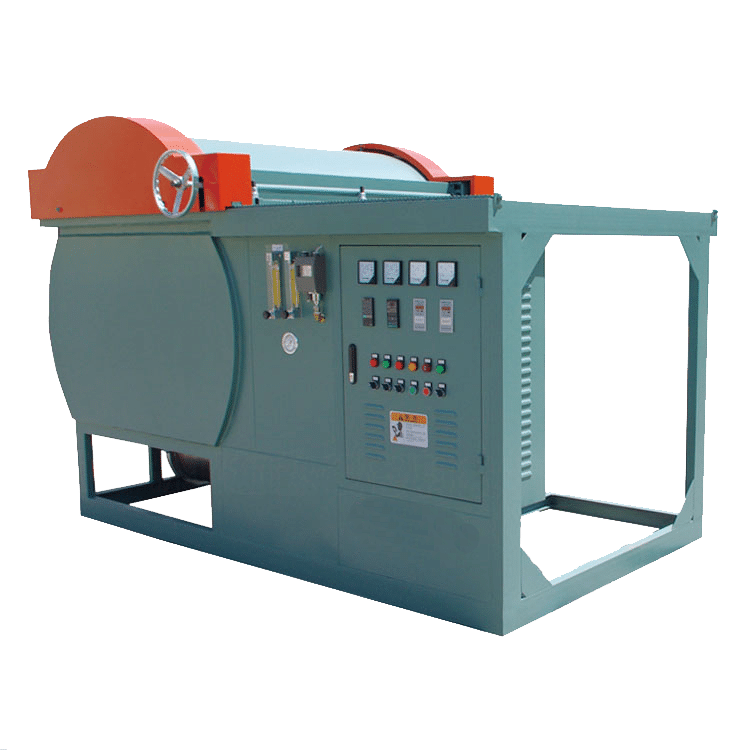
Where is the Calcination Furnace Used?
This furnace is a workhorse in industries that process raw powders and minerals. Its main job is to transform materials.
- Chemical Industry: Producing materials like magnesium oxide, zinc oxide, lithium compounds, and vanadium pentoxide.
- Building Materials & Mining: Processing kaolin (for ceramics), calcium carbonate, gypsum, and magnesite.
- Metallurgy: Assisting in the extraction and processing of heavy metals.
- New Energy & Electronics: Used in the experimental production of battery materials (like lithium iron phosphate) and rare earth materials.
How Does a Vacuum Cleaning Furnace Work?
Unlike a furnace that changes materials, a vacuum cleaning furnace is designed to remove contaminants. It specializes in cleaning parts clogged with stubborn polymers (plastics).
The cleaning is a smart, multi-stage process that uses heat and the absence of air:
- Melting Stage (≈300°C): The furnace heats the dirty parts to about 300°C. At this temperature, most polymer residues melt and drip down into a collection container.
- Oxidation & Cleaning Stage (400-500°C): The temperature is raised further to between 400°C and 500°C. A vacuum pump removes most of the air, and a tiny amount of fresh air is introduced. In this low-oxygen, vacuum environment, any remaining polymer burns away cleanly. It turns into harmless carbon dioxide and water vapor.
- Exhaust: These gases are sucked out by the vacuum pump, often through a water spray to scrub them clean, and are safely discharged.
Key Features:
- Vacuum Environment: The near absence of air prevents dangerous burning and allows for clean, residue-free oxidation.
- Efficiency: Heating elements are inside the sealed chamber, leading to fast heating, good temperature uniformity, and lower energy use compared to older methods.
- Full Automation: The entire cleaning cycle is pre-programmed and runs automatically from start to finish, including safety alarms.
Where is the Vacuum Cleaning Furnace Used?
This furnace is essential for maintenance and recycling in synthetic fiber and plastics manufacturing.
- Fiber Industry: Cleaning spinnerets (the precise nozzles that form fibers), filters, and other components used in producing polyester, nylon, and polypropylene.
- Plastics Processing: Cleaning extrusion molds and dies that get coated with plastic residues.
Key Differences at a Glance
The table below summarizes the fundamental differences between the two types of furnaces:
Making the Right Choice
Choosing the right furnace is straightforward once you know the goal:
- Choose a high-temperature calcination furnace if you need to make a new material—like turning limestone into lime or processing ceramic powders.
- Choose a Vakuumreinigungsofen if you need to restore a dirty tool—like cleaning a clogged spinneret or plastic mold to like-new condition.
In short, one furnace is for creating, and the other is for cleaning. Their specialized designs make them irreplaceable tools in their respective fields of modern industry.
For further consultation, please contact our technical team for expert advice.
Whatsapp:86-19106101570
wechat:86-19106101570
email:fob@jsryan.com
 Chinese
  Russian
  Indonesian
  German
  French
  Italian
  Spanish
  Portuguese
  Polish
  Czech
Czech  Turkish
  Korean
  Japanese
  Arabic
  Persian
  Dutch
Dutch  English