
Choosing the right heating system https://8ruiyan.com/boiler-products/for your process is a big decision. Two common options are the biphenyl heater and the electric thermal oil heater. Both provide indirect heat. Both are used in demanding industries. But they work differently. Understanding the differences helps you pick the better fit.
What They Have in Common
Before looking at differences, let us see what is similar.
- Indirect Heating: Neither heats the product directly. Instead, they heat a fluid that carries thermal energy to the process.
- Closed‑Loop Systems: Both circulate the heating medium in a sealed loop. This improves efficiency and safety.
- Precise Temperature Control: You can maintain stable temperatures with good accuracy.
- Wide Industrial Use: Both serve industries like chemical processing, plastics, and pharmaceuticals.
The Main Difference: How They Heat
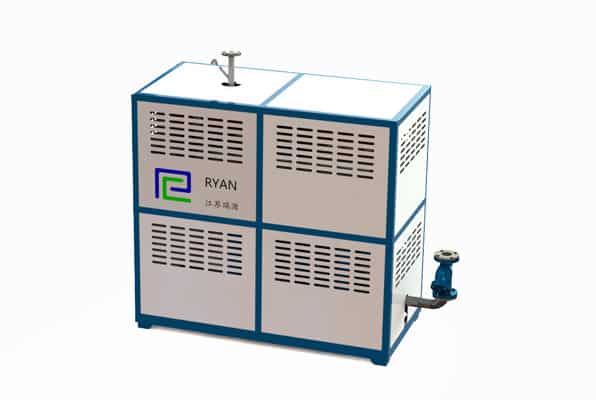
Electric Thermal Oil Heater
This system uses electricity as the energy source. It heats thermal oil inside a heater body. A pump circulates the hot oil to the user equipment. The oil then returns to be reheated.
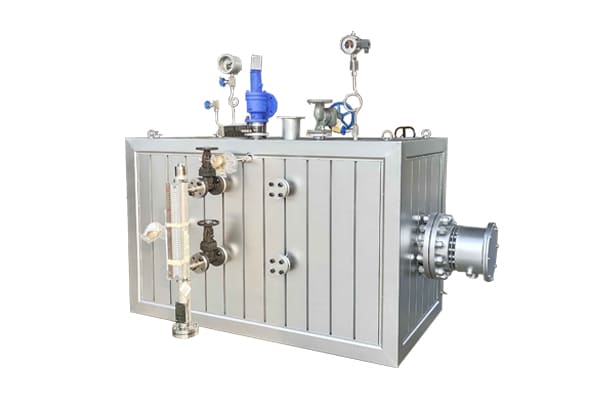
Biphenyl Heater (also called a biphenyl boiler or Dowtherm system)
This system uses a special heat transfer fluid, often a mixture of biphenyl and diphenyl oxide. It operates at high temperatures but at much lower pressure than steam. It can be heated by electricity or by fuel (gas/oil). The fluid evaporates and condenses, transferring heat very efficiently.
Key Differences at a Glance
| Feature | Electric Thermal Oil Heater | Biphenyl Heater |
|---|---|---|
| Heat Transfer Fluid | Thermal oil (organic fluid) | Biphenyl / diphenyl oxide mixture |
| Operating Principle | Liquid phase (oil stays liquid) | Vapor phase / liquid phase options |
| Maximum Temperature | Typically up to 350°C | Can reach 400°C or higher |
| Presión de funcionamiento | Low pressure (liquid) | Very low pressure even at high temps |
| Energy Source | Electric only | Electric, gas, or oil fired |
| System Complexity | Simpler | Slightly more complex due to vapor handling |
| Temperature Uniformity | Very good | Excellent, especially in vapor phase |
Advantages and Disadvantages
Advantages of Electric Thermal Oil Heater
- Simple Design: Fewer components mean easier installation and maintenance.
- Clean and Quiet: No combustion, no emissions, low noise.
- Fast Response: Electric heating allows quick startup and precise control.
- Lower Initial Cost: Generally more affordable for smaller to medium systems.
- Safe: Operates at low pressure with no flame.
Disadvantages of Electric Thermal Oil Heater
- Temperature Limit: Maximum temperature is usually around 350°C. Beyond that, the oil degrades.
- Operating Cost: Electricity can be expensive in some regions.
- Fluid Aging: Thermal oil needs periodic testing and replacement.
Advantages of Biphenyl Heater
- Higher Temperature Capability: Can operate at 400°C or more without high pressure.
- Excellent Heat Transfer: The vapor phase provides very uniform heating across the equipment.
- Energy Flexibility: Can use gas, oil, or electricity as the energy source.
- Long Fluid Life: Biphenyl fluids are thermally stable and last longer.
Disadvantages of Biphenyl Heater
- Higher Initial Investment: More complex design means higher upfront cost.
- More Complex Operation: Vapor systems require careful monitoring and control.
- Safety Considerations: The fluid is flammable, and leaks can create vapor clouds.
- Special Fluid Handling: The heat transfer fluid is more expensive and requires specific handling.
Which One Should You Choose?
Choose an electric thermal oil heater if:
- Your process temperature is below 350°C.
- You want a simple, clean, and easy‑to‑operate system.
- Electricity is affordable in your area.
- Your system size is small to medium.
Choose a biphenyl heater if:
- Your process requires temperatures above 350°C.
- You need very uniform heating, especially for large equipment.
- You have access to gas or oil and prefer lower operating energy costs.
- You are willing to invest in a more advanced system for long‑term performance.
Final Thought
Heating system is reliable and effective. The best choice depends on your temperature needs, available utilities, budget, and operational preference. Talk to an experienced supplier. Share your process details. A good recommendation will help you get the most value from your heating equipment.
For further problems about heating system, please contact our technical team for expert advice.
Whatsapp:86-19106101570
wechat:86-19106101570
email:fob@jsryan.com
 Chinese
  Russian
  Indonesian
  German
  French
  Italian
  Spanish
  Portuguese
  Polish
  Czech
Czech  Turkish
  Korean
  Japanese
  Arabic
  Persian
  Dutch
Dutch  English