
When it comes to industrial heating solutions, flange heaters https://8ruiyan.com/en/all-organic-heat-carrier-boilers/ are among the most popular and reliable choices. They are widely used to heat liquids, gases, and other media in tanks, pressure vessels, and process systems. In this post, we’ll break down what flange heaters are, how they work, their common types, and where they are typically applied.
What Is a Flange Heater?
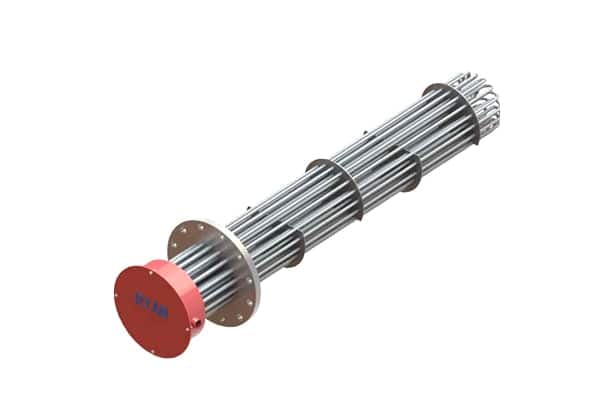
A flange heater is an electric immersion heater that consists of tubular heating elements brazed or welded onto a flange. The flange allows the heater to be bolted directly onto a matching flange on a tank or vessel. This design makes installation, maintenance, and replacement simple and safe.
Working Principle
Flange heaters operate on a simple principle. Electric current passes through resistive wires inside the tubular elements. These wires generate heat, which transfers through the tube walls and directly into the surrounding medium (liquid, gas, or slurry). A built-in thermostat or temperature sensor can control the heating process, ensuring precise temperature regulation.
Advantages at a Glance
- Compact and high power capacity
- Easy to install or remove without draining the tank
- Durable and suitable for high-pressure applications
- Customizable in size, material, and wattage
Common Types of Flange Heaters
- Standard Circulation Heaters
Used in forced circulation systems where the medium flows through a heated pipe or chamber. - Side Arm Flange Heaters
Mounted on the side of tanks or boilers to heat water or thermal fluids. - Over-the-Side Flange Heaters
Designed for open tanks where direct insertion from the top is needed. - Explosion-Proof Flange Heaters
Built for hazardous environments, featuring sealed enclosures to prevent ignition. - High-Density vs. Low-Density Flange Heaters
High-density for clean oils and gases; low-density for viscous or scaling-prone fluids.
Materials Used
The choice of sheath material depends on the application:
- Copper – low-cost, good for clean water
- Stainless Steel (304/316) – corrosion-resistant, ideal for water and mild chemicals
- Incoloy® – excellent for high-temperature and corrosive fluids
- Titanium – for seawater or strong acids
Key Applications
Flange heaters are found across many industries, including:
- Oil & Gas – heating crude oil, fuel oil, and natural gas
- Chemical Processing – heating acids, alkalis, and solvents
- Water Treatment – maintaining water temperature in tanks
- Food & Beverage – heating edible oils, water, or syrups
- Pharmaceuticals – precise heating for manufacturing processes
- HVAC – heating hot water or thermal fluids in boiler systems
- Power Generation – preheating air, lubricating oil, or other fluids
Things to Consider Before Choosing a Flange Heater
- Wattage and voltage – match the power supply and heating needs
- Sheath material – must resist corrosion and temperature
- Flange size and rating – must fit the vessel’s mating flange
- Control system – thermostat, thermocouple, or digital controller
- Immersion length – should be fully submerged in the medium
Conclusion
Flange heaters offer a rugged, efficient, and flexible heating solution for many industrial processes. Whether you’re heating water in a small tank or crude oil in a large pressure vessel, there’s likely a flange heater designed for the job. By selecting the right type, material, and power rating, you can ensure safe, long-lasting performance.
Have questions or need help specifying a flange heater for your application? Feel free to reach out or leave a comment below.
For further problems about industrial heating solutions , please contact our technical team for expert advice.
Whatsapp:86-19106101570
wechat:86-19106101570
email:fob@jsryan.com
 Chinese
  Russian
  Indonesian
  German
  French
  Italian
  Spanish
  Portuguese
  Polish
  Czech
Czech  Turkish
  Korean
  Japanese
  Arabic
  Persian
  Dutch
Dutch  English