
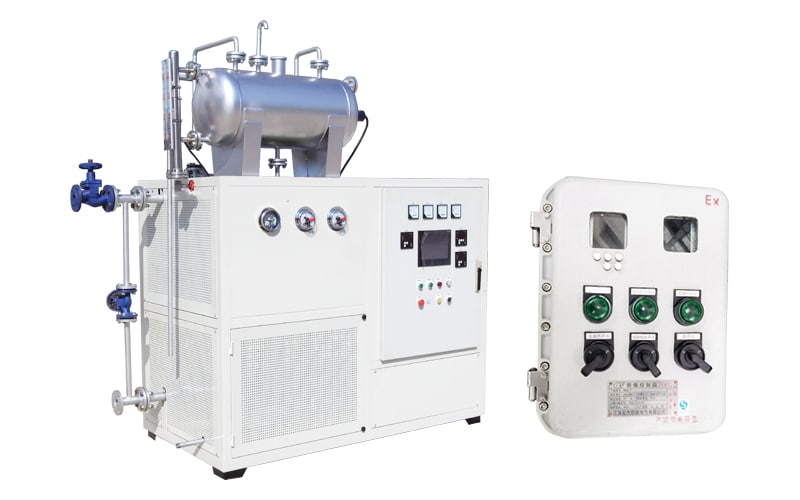
Selecting the correct power for an electric thermal oil heater https://8ruiyan.com/en/all-organic-heat-carrier-boilers/ is critical. An undersized unit will struggle to meet heating demands, reducing efficiency and causing excessive wear. An oversized heater leads to unnecessary energy consumption, higher upfront costs, and potential control issues. The right choice ensures optimal performance, energy savings, and system longevity.
Key Factors for Power Calculation
Several factors determine the required heater power. Consider each one carefully.
1. Heat Transfer Oil Properties
The specific heat capacity and maximum operating temperature of your thermal oil are essential. A higher specific heat means the oil requires more energy to increase its temperature. You need to know the oil’s starting and target temperatures to calculate the energy needed for heating.
2. Desired Heating Capacity
Determine the required temperature rise and the oil flow rate through the system. The basic formula for heating power (P) is:P = m * Cp * ΔT
Where m is the mass flow rate, Cp is the specific heat capacity, and ΔT is the temperature difference. This gives you the theoretical power needed to heat the oil itself.
3. Accounting for System Heat Losses
Theoretical power is not enough. You must account for heat losses from pipes, valves, and the expansion tank. Well-insulated systems in controlled environments may have losses around 10-15%. Poorly insulated systems or those in cold areas might experience 20-30% heat loss. Always add a safety margin to your calculated power to cover these losses.
Additional Practical Considerations
Process Requirements and Load Type
Analyze your specific process. Is it a continuous operation with a steady load, or does it involve periodic high-demand cycles? For cyclic processes, the heater must handle the peak load, not just the average demand. Also, consider if you need power for initial startup from a cold state, which can be more demanding than maintaining temperature.
Voltage and Phase Compatibility
Ensure your electrical supply matches the heater’s requirements. Higher-power units typically need three-phase power. Verify the available voltage (e.g., 380V, 440V) and amperage to avoid electrical incompatibility.
Control System and Staging
For larger systems, consider a modular or multi-stage setup. Using several smaller heaters instead of one large unit allows for better load matching and redundancy. If one heater needs maintenance, the others can continue operating at reduced capacity.
Step-by-Step Selection Guide
- Gather Data: Collect oil properties (Cp, max temp), flow rate (m³/h), and required process temperature.
- Calculate Theoretical Power: Use the formula
P = m * Cp * ΔT. Convert units consistently (e.g., kW). - Add Heat Loss Margin: Apply a safety factor. For well-insulated systems, add 15-20%. For average or unknown conditions, 25-30% is a common practice.
- Consider Peak Demand: If your process has cyclical peaks, size the heater for the peak load, not the average.
- Consult a Professional: Share your calculations with a heater manufacturer or engineer. They can validate your figures and recommend a suitable model from their product range.
Common Sizing Mistakes to Avoid
- Ignoring Heat Losses: This is the most frequent error, leading to an undersized heater.
- Oversizing ‘Just to Be Safe’: Excessive oversizing causes short cycling, reducing efficiency and component life.
- Forgetting Startup Conditions: The initial heat-up from ambient temperature often requires more time or temporary derating of the process.
- Neglecting Future Expansion: Consider if your process might need higher capacity in the future. Some scalability might be wise.
Kesimpulan
Choosing the right power is a balance between meeting thermal demands and operating efficiently. Start with accurate process data, apply a correct heat loss margin, and consider real-world operating cycles. When in doubt, consult with a specialist. A properly sized electric thermal oil heater is a reliable and efficient cornerstone of your thermal system.
For further problems about Thermal Oil System, please contact our technical team for expert advice.
Whatsapp:86-19106101570
wechat:86-19106101570
email:fob@jsryan.com
 Chinese
  Russian
  Indonesian
  German
  French
  Italian
  Spanish
  Portuguese
  Polish
  Czech
Czech  Turkish
  Korean
  Japanese
  Arabic
  Persian
  Dutch
Dutch  English
Hello! I could have sworn I’ve been to this blog before but after reading through
some of the post I realized it’s new to me. Nonetheless, I’m definitely happy I found it and
I’ll be book-marking and checking back often!
Thank you. Please feel free to contact us if you need any assistance. WHATSAPP +86 19106101570