
전기 온열 오일 히터 https://8ruiyan.com/en/all-organic-heat-carrier-boilers/are widely used across industries. They provide stable, efficient, and clean heat. Unlike steam systems, they operate at low pressure even at high temperatures. This makes them a popular choice for many manufacturing processes.
But how do you know if an electric thermal oil heater is right for your application? And once you decide, how do you choose the right one? Let’s break it down.
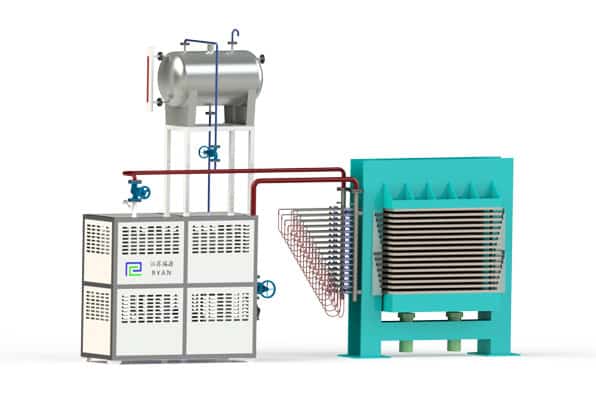
Common Industries That Use Electric Thermal Oil Heaters
These heaters serve a variety of sectors. Here are some of the most common:
- Chemical Industry
Used to heat reactors, distillation units, and mixing tanks. Precise temperature control is critical here. - Plastics and Rubber
Powers calenders, extruders, presses, and molding machines. Uniform heat ensures product quality. - Food Processing
Used for drying, cooking, and frying applications. Clean electric heat meets hygiene standards. - Pharmaceuticals
Provides controlled, contamination‑free heat for reactors and dryers. Compliance with strict regulations is easier with electric systems. - Wood and Panel Processing
Heats hot presses for plywood, MDF, and laminates. Stable temperatures improve bonding strength. - Textile Industry
Used in drying, heat setting, and finishing processes. Consistent heat helps maintain fabric quality. - Asphalt and Bitumen
Keeps storage tanks and pipelines at the right temperature. Prevents solidification and ensures smooth flow. - New Energy and Battery Manufacturing
Supports drying and curing processes in battery production. Precision and reliability are key.
How to Choose Based on Your Process Equipment
The size and type of your equipment determine the heater’s specifications. Different machines have different heating needs.
| Equipment Type | Key Considerations |
|---|---|
| Reactor / Kettle | Look at volume, required temperature, heating/cooling cycles, and whether the jacket or internal coil is used. |
| Press / Calender | Focus on heating uniformity, ramp‑up time, and how many zones need independent control. |
| Dryer / Oven | Consider airflow, temperature range, and whether the heat needs to be direct or indirect. |
| Tank / Storage Vessel | Check insulation quality, ambient temperature, and how quickly heat loss occurs. |
| Extruder / Injection Molding Machine | Pay attention to barrel zones, screw design, and required temperature accuracy. |
The best way to start is to share your process details with a supplier. Tell them what equipment you use and what temperature you need. They can then recommend the right power and configuration.
Key Factors to Consider When Selecting a Heater
Choosing an electric thermal oil heater is not just about picking a power rating. Several factors affect performance and long‑term reliability.
1. Required Temperature
What is the maximum temperature your process needs? Different thermal oils have different limits. If you need 300°C or more, you must select the right fluid and heater design.
2. Heating Capacity (Power)
This is usually measured in kilowatts (kW). The right power depends on:
- How much material needs to be heated
- How fast you need it to reach temperature
- How much heat is lost during operation
A supplier can help you calculate this based on your equipment and process.
3. Control Accuracy
Some processes require very tight temperature control. Others allow more variation. Ask yourself: does your product quality depend on staying within ±1°C? If yes, you need a more advanced control system.
4. System Components
A complete heating system includes more than just the heater. You also need:
- A circulation pump (right flow rate and pressure)
- An expansion tank
- Piping and valves
- A control panel
Make sure all components are matched to your application.
5. Safety Features
Look for built‑in protections such as:
- Over‑temperature alarms
- Low‑flow shutdown
- Pressure monitoring
- Emergency stop
These features protect both the equipment and your operators.
6. Installation Environment
Where will the heater be placed? Indoors or outdoors? Is the area hazardous? In chemical plants, you may need explosion‑proof construction. In tight spaces, a compact footprint matters.
7. Maintenance and Support
Consider how easy it is to replace heating elements or service the pump. A supplier with local support can save you time and money in the long run.
결론
Electric thermal oil heaters are a reliable solution for many industries. They offer clean, efficient, and precise heat. Choosing the right one starts with understanding your process equipment and your temperature needs. Then, consider factors like power, control, safety, and installation environment.
When in doubt, talk to an experienced supplier. Share your process details. A good recommendation will help you get the best performance from your heating system.
For further problems about heating system, please contact our technical team for expert advice.
Whatsapp:86-19106101570
wechat:86-19106101570
email:fob@jsryan.com
 Chinese
  Russian
  Indonesian
  German
  French
  Italian
  Spanish
  Portuguese
  Polish
  Czech
Czech  Turkish
  Korean
  Japanese
  Arabic
  Persian
  Dutch
Dutch  English