
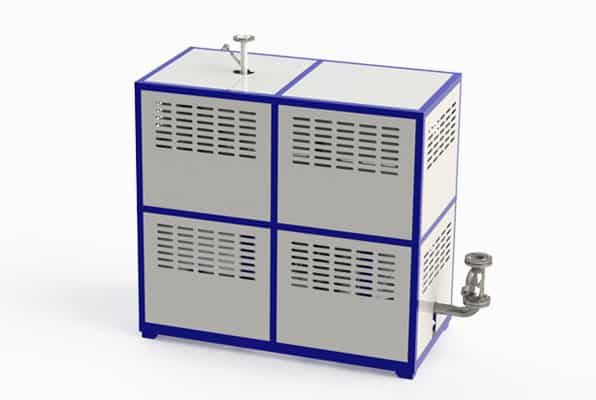
When it comes to heating process equipment, choosing the right method can save you money, time, and major headaches. Two common approaches are the Electric Thermal Oil Heater (indirect heating)https://8ruiyan.com/en/all-organic-heat-carrier-boilers/ and the Direct Immersion Heater (direct heating). Here’s a clear breakdown of how they differ, along with the pros and cons of each.
How They Work
Electric Thermal Oil Heater
This system heats a special thermal fluid (oil) in a closed loop. The hot oil then circulates through a jacket or coils around your equipment, transferring heat indirectly. The heater itself never touches the process material.
Direct Immersion Heater
A heating element goes straight into your process fluid or equipment. Think of a giant electric water heater element. The heat is generated right where it is needed, with no middleman.
Key Differences
| Feature | Thermal Oil Heater | Direct Immersion |
|---|---|---|
| Heat transfer | Indirect (oil loop) | Direct (element in fluid) |
| Temperature control | Very uniform | Less uniform, hot spots possible |
| Fluid compatibility | Works with almost any fluid | Element must resist corrosion/fouling |
| System complexity | Higher (pump, expansion tank) | Lower (simple installation) |
Pros and Cons
Electric Thermal Oil Heater
Pros
- Excellent temperature uniformity throughout your equipment
- Can reach very high temperatures (up to 400°C) at low pressure
- Heater never contacts your process fluid – no contamination risk
- Long system life since the heating element is in clean oil
Cons
- Higher initial cost (more components)
- Requires more floor space
- Needs regular oil checks and occasional replacement
- Slightly less energy efficient due to thermal losses in the loop
Direct Immersion Heater
Pros
- Low upfront cost and simple design
- Very energy efficient – no heat transfer medium losses
- Instant heat response
- Compact, fits right into existing tanks or pipes
Cons
- High risk of localized overheating (hot spots) that can burn fluids
- Element can scale, corrode, or foul, leading to failure
- Difficult to clean or replace without draining the system
- Not suitable for corrosive or sensitive process fluids
When to Choose Which
Pick the thermal oil heater if you need precise, even heating for sensitive fluids, high temperatures (above 200°C), or want to keep electricity away from your process material.
Pick the direct immersion heater if you have a simple, non-corrosive fluid (like water or light oil), a tight budget, and don’t mind occasional maintenance or temperature variations.
Final Verdict
Direct immersion is quick and cheap for basic jobs. But for reliability, temperature precision, and protecting your process fluid, the electric thermal oil heater is the professional’s choice – especially in industries like chemical processing, food production, or plastics.
Choose based on your fluid, your temperature needs, and how much downtime you can afford.
For further problems about heating system, please contact our technical team for expert advice.
Whatsapp:86-19106101570
wechat:86-19106101570
email:fob@jsryan.com
 Chinese
  Russian
  Indonesian
  German
  French
  Italian
  Spanish
  Portuguese
  Polish
  Czech
Czech  Turkish
  Korean
  Japanese
  Arabic
  Persian
  Dutch
Dutch  English