
Controlling reactor temperature is essential for safety and product quality. Three main methods exist: jackets, internal coils, and external circulation loops. Each method has different speed, cost, and cleaning needs. Jackets work well for simple tasks. Coils provide faster heat transfer. External loops offer the highest precision. Choosing the right method depends on reaction type, reactor size, fouling risk, and budget. Good temperature control keeps reactions stable and prevents accidents.
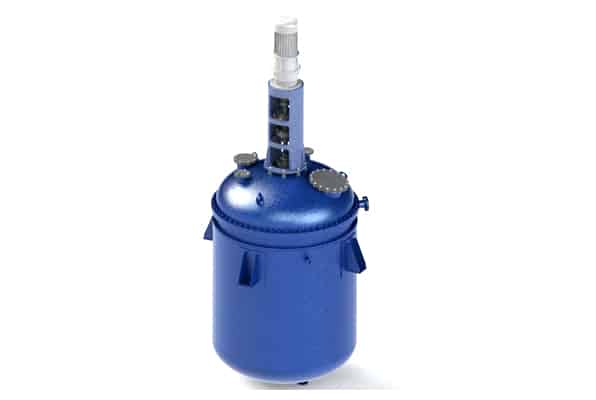
Why Control Reactor Temperature?
Temperature affects reaction speed.
Too hot may cause runaway reactions.
Too cold slows down production.
Poor control ruins product quality.
Some reactions release heat strongly.
Others need constant heating.
Safe operation depends on stable temperature.
Common Methods for Temperature Control
Three main approaches exist:
- Jacket heating/cooling
Fluid flows through an outer jacket.
Works for most standard reactions.
Simple and reliable. - Internal coils
Coils sit inside the reactor.
Heat transfers directly.
Faster response than jackets. - External circulation loop
Product pumps through an external heat exchanger.
Best for very large reactors.
Offers precise control.
Key Difference
| Feature | Jacket | Coil | External Loop |
|---|---|---|---|
| Heat transfer rate | Moderate | High | Very high |
| Space use | Outside only | Inside | Outside |
| Cleaning ease | Easy | Hard | Moderate |
| Cost | Medium | Low | High |
| Response time | Slow | Fast | Fastest |
What Fluids Are Used?
Steam for heating.
Cooling water for mild cooling.
Chilled brine for low temperatures.
Thermal oil for high temperatures (above 150°C).
Cryogenic fluids for very cold reactions.
How to Choose the Right Method
Ask these questions first:
- How fast must temperature change?
Fast → coil or external loop.
Slow → jacket is fine. - What is the reactor size?
Small (<500 L) → jacket or coil.
Large (>5000 L) → external loop often better. - Does the product foul surfaces?
Yes → avoid internal coils.
No → coils are acceptable. - Is the reaction exothermic or endothermic?
Strong exothermic → need fast cooling (coil or loop).
Mild heating → jacket works. - What budget do you have?
Low budget → jacket or simple coil.
High precision needed → invest in external loop.
Practical Tips
Install temperature sensors at multiple points.
Avoid dead zones in the reactor.
Use cascade control for better stability.
Always test with water before real product.
Consider adding a backup cooling system.
Final Recommendation
For most batch reactors: start with a jacket.
Add internal coils if you need extra capacity.
Use external loops only for demanding processes.
Match the method to your reaction risks.
Keep it simple when possible.
Monitor temperature continuously.
Train operators on emergency cooling.
For further problems about heating system https://8ruiyan.com/en/all-organic-heat-carrier-boilers/, please contact our technical team for expert advice.
Whatsapp:86-19106101570
wechat:86-19106101570
email:fob@jsryan.com
 Chinese
  Russian
  Indonesian
  German
  French
  Italian
  Spanish
  Portuguese
  Polish
  Czech
Czech  Turkish
  Korean
  Japanese
  Arabic
  Persian
  Dutch
Dutch  English