
Vacuum cleaning furnaces(Polymers) https://8ruiyan.com/en/all-vacuum-cleaning-furnaces/are essential for cleaning polymer residues from spinning components, filters, and more in chemical fiber and plastics industries. Yet, equipment managers often battle three persistent issues: incomplete cleaning, furnace blackening, and vacuum failures. These problems disrupt production schedules and inflate maintenance costs. This guide delivers actionable solutions to crush these challenges!
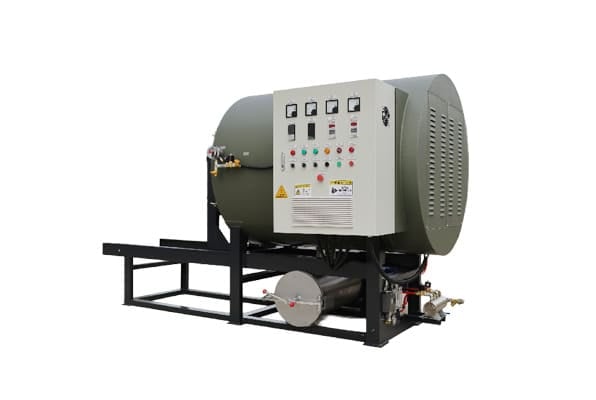
Challenge 1: Incomplete Cleaning – Lingering Residues?
Symptoms:
- Visible polymer residue on components
- Incomplete unclogging of microporous filters
- Abnormal pressure spikes during first post-cleaning use
Root Causes:
- Insufficient temperature/time: Polymers not reaching full pyrolysis temperature or inadequate dwell time.
- Low vacuum level: Pyrolysis byproducts not evacuated, causing “re-cooking.”
- “One-size-fits-all” process: Using identical curves for PET, PA, PP.
- Overloading: Restricted heat/flow due to overcrowded workload.
Solutions:
- Precise temperature control: Calibrate thermocouples. Set polymer-specific temperatures (e.g., PET: 450–500°C; PA6: 400–450°C). Extend dwell time (add 1–2 hrs for stubborn residues).
- Vacuum assurance: Achieve ≤10 Pa before heating (check pump oil, seals, valves).
- Customized recipes: Build dedicated process libraries (temp/time/vacuum/N₂ flow) per material.
- Smart loading: Maintain ≥50mm spacing between parts. Clean complex items in batches.
Challenge 2: Furnace Blackening – The Carbon Nightmare
Symptoms:
- Black carbon powder coating walls, racks, and parts
- Carbon buildup in vacuum pipes
- Post-cleaning part blackening requiring rework
Root Causes:
- Rapid heating: Polymers “smoldering” into carbon in O₂-deficient zones.
- Delayed vacuum: Oxygen residues causing incomplete combustion during ramp-up.
- Überhitzung: Excessive temperatures carbonizing polymers.
- Premature opening: Ambient O₂ carbonizing hot parts.
- Silicone oil sabotage: Lubricants on components accelerating carbonization.
Solutions:
- Controlled ramp-up: Use step heating (e.g., 50°C/h) in 200–350°C (primary pyrolysis zone).
- Preemptive vacuum: Pull ≤10 Pa before heating starts. Verify pump speed/seals.
- Golden temperature: Optimize cleaning temp (avoid >550°C unless specified).
- Strict opening protocol: Open only at ≤80°C !
- Source control: Wipe silicone oils/greases from parts pre-cleaning.
Challenge 3: System Failures – Vacuum Collapse, Thermal Chaos & Slow Cooling
Symptoms:
- Vacuum stuck >50 Pa
- Doubled heat-up time, >20°C chamber gradient
- Cooling >10 hours delaying production
Root Causes:
| Failure Type | Key Culprits |
|---|---|
| Vacuum failure | Emulsified pump oil, degraded seals, valve leaks, clogged filters, wet parts |
| Temperature faults | Broken heaters, faulty thermocouples, SSR/contactor failure, controller error, insulation damage |
| Slow cooling | Cooling water issues (pressure/temp/scale), overloaded furnace |
Solutions:
- Vacuum system maintenance:
- Monthly pump oil checks (replace if milky). Quarterly oil changes.
- Critical! Leak-check all seals (door, valves, electrodes) with helium/soap solution.
- Clean/replace vacuum line filters.
- Thermal system integrity:
- Measure heater resistance (balance phases). Replace broken elements.
- Calibrate thermocouples. Check for oxidized/loose terminals.
- Test SSR switching function.
- Cooling system optimization:
- Avoid loading >70% chamber volume.
🛡️ Ultimate Defense: Preventive Maintenance Checklist (Monthly!)
- Seal care: Clean door grooves, lubricate seals with silicone grease, inspect for cracks.
- Pump health: Check oil level/color (replace if milky/black). Listen for abnormal noise.
- Electrical safety: Tighten terminals. Verify heater insulation resistance.
- Instrument calibration: Cross-check furnace temp with reference thermocouple. Validate vacuum gauge.
- Chamber hygiene: Remove carbon dust. Maintain unobstructed gas flow.
Conclusion: Efficient Cleaning = Precision Process × Rigorous Maintenance
Vacuum cleaning furnaces (Polymers)aren’t “black boxes.” Defeating residue, carbon, and failures hinges on:
Understanding principles + Precision control + Preventive upkeep.
Act now:
- Inspect door seals for aging.
- Check vacuum pump oil clarity.
- Audit if processes match material specs.
Master these field-tested tactics to transform your vacuum furnace into a relentless production ally!
For further consultation, please contact our technical team for expert advice.
Whatsapp:86-19106101570
wechat:86-19106101570
email:nieyili@cnryan.com
 Chinese
  Russian
  Indonesian
  German
  French
  Italian
  Spanish
  Portuguese
  Polish
  Czech
Czech  Turkish
  Korean
  Japanese
  Arabic
  Persian
  Dutch
Dutch  English
I go to see each day some websites and websites to read content,
except this web site presents feature based articles.
Thank you. Please feel free to contact us if you need any assistance. WHATSAPP +86 19106101570