
Thermal oil systems https://8ruiyan.com/en/all-organic-heat-carrier-boilers/ are widely used in industrial heating. They offer high temperatures at low pressure. This makes them safer and more efficient than steam in many cases.
But choosing the right thermal oil is not simple. The oil’s physical properties directly affect the design of the thermal oil heater (also called a thermal fluid heater). Ignoring these properties can lead to poor performance, coking, or even system failure.
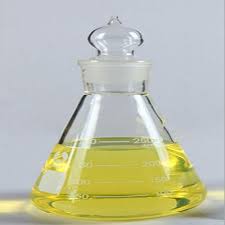
Common Types of Thermal Oil
Thermal oils fall into two main categories.
1. Mineral Oils
These are refined from petroleum. Examples include alkylbenzene and alkylnaphthalene. Mineral oils are cost-effective. They work well up to about 300°C. However, they have limited thermal stability. Long-term use at high temperatures can cause coking.
2. Synthetic Oils
These are manufactured through chemical synthesis. Examples include hydrogenated terphenyl and dibenzylbenzene. Synthetic oils cost more but offer better thermal stability. They can operate up to 400°C. Some synthetic oils also work at very low temperatures, down to -70°C.
Do not mix different types. Always flush the system before changing oil types.
Key Physical Properties That Affect Heater Design
Heater design is not fixed. It must match the oil’s properties. The following parameters are critical.
1. Maximum Allowable Film Temperature
This is the most important limit. The heater tube wall contacts hot oil. The tube wall temperature must stay below the oil’s maximum film temperature. If it exceeds this limit, the oil cracks and forms coke. Coke reduces heat transfer and blocks flow.
The design rule is:
Tube wall temperature = bulk oil temperature + film temperature rise
This total must be ≤ the oil’s maximum film temperature.
If the selected oil has a low film temperature limit, the heater needs more heat transfer area. This increases heater size and cost.
2. Specific Heat and Density
These two properties determine how much energy the oil carries per unit mass or volume.
- Higher specific heat means more heat per kilogram.
- Higher density means more heat per liter.
Low specific heat or low density forces higher circulation flow. Higher flow means a larger pump and more pipe resistance. The heater coil design must also adjust to the flow rate.
3. Thermal Conductivity
Thermal conductivity affects heat transfer inside the heater tubes. Mineral oils typically have conductivity of 0.10 to 0.12 W/(m·K). Synthetic oils are often slightly lower.
If conductivity is low, the heater needs either higher flow velocity or a higher wall temperature. But higher wall temperature may approach the film temperature limit. The practical solution is often adding more tube surface area.
4. Viscosity (Especially Cold Start Viscosity)
Viscosity changes with temperature. Cold start viscosity is often overlooked but very important. At low temperatures, some oils become too thick to pump.
High cold viscosity causes pump cavitation. The pump may struggle to start. In severe cases, the pump motor burns out.
Most engineers recommend a maximum cold start viscosity of 200–300 cSt. If the oil exceeds this at ambient temperature, the system needs preheating. The heater design must then include a preheat circuit or an electric immersion heater.
5. Coefficient of Thermal Expansion and Vapor Pressure
Thermal expansion determines the size of the expansion tank. High expansion coefficient oil needs a larger tank to accommodate volume changes from cold start to operating temperature.
Vapor pressure matters for closed-loop systems. If the oil has high vapor pressure at operating temperature, the system must withstand higher pressure. It may also require a nitrogen blanket to keep the oil from vaporizing.
A Real-World Example
A hot mix asphalt plant once selected a mineral oil with a maximum film temperature of 310°C. The design outlet temperature was 290°C. The calculation showed the tube wall temperature would reach 308°C. That left almost no safety margin.
The plant switched to a synthetic oil with a 350°C film temperature limit. The heater could then run at a higher heat flux. The heater size decreased by 15%. The synthetic oil cost more per liter, but the smaller heater and longer oil life made the total cost lower.
Common Mistakes to Avoid
Mistake 1: Ignoring film temperature
Bulk oil temperature is not the same as tube wall temperature. Always calculate the film temperature rise.
Mistake 2: Overlooking cold viscosity
Many pump failures happen during winter restarts. Check the viscosity at the lowest expected ambient temperature.
Mistake 3: Mixing different oils
Even two mineral oils from different brands may have different additives or cracked fractions. Mixing often accelerates degradation.
Reflexiones finales
Thermal oil and the oil heater are a matched pair. The oil’s physical properties determine heater size, pump selection, expansion tank volume, and even materials of construction.
Before finalizing a heater design, obtain a complete property data sheet for the oil. Pay special attention to the temperature-viscosity curve, specific heat, thermal conductivity, and maximum film temperature.
Choosing the right oil from the start means a safer system, fewer shutdowns, and a longer heater life.
For further problems about industrial heating solutions , please contact our technical team for expert advice.
Whatsapp:86-19106101570
wechat:86-19106101570
email:fob@jsryan.com
 Chinese
  Russian
  Indonesian
  German
  French
  Italian
  Spanish
  Portuguese
  Polish
  Czech
Czech  Turkish
  Korean
  Japanese
  Arabic
  Persian
  Dutch
Dutch  English