
Today, let’s talk about a small but mighty component in thermal oil heating systems https://8ruiyan.com/en/all-organic-heat-carrier-boilers/: the oil filter. If you operate or maintain a system like this, understanding this part is key.
What is the oil filter?
Think of it as the guardian of your system. The thermal oil filter is a simple device installed in your piping. Inside it, there is a filter element, often made of a fine mesh or special material, designed to catch tiny solid particles circulating in your heat transfer oil.
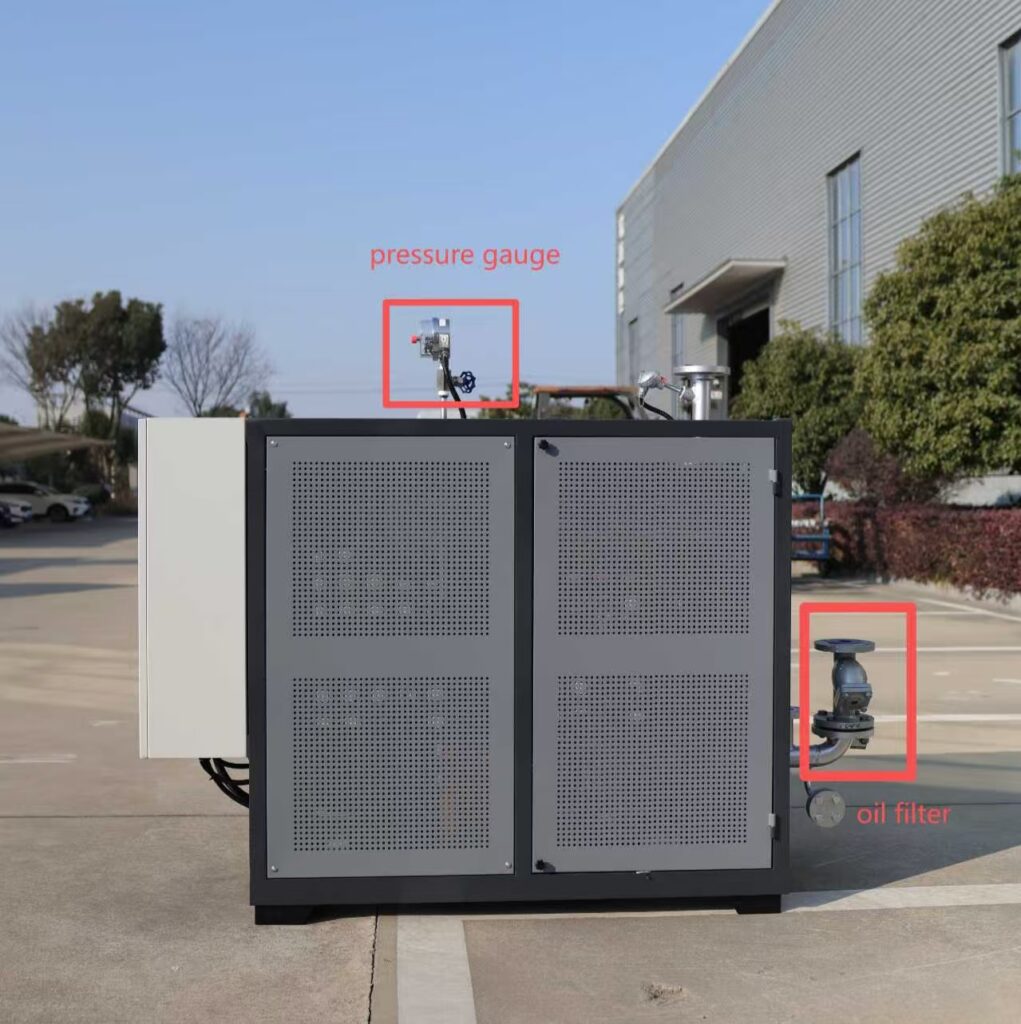
What Does the oil filter Do? Its Purpose.
Over time, things happen inside a closed-loop heating system. Thermal oil can degrade slightly at high temperatures. Parts inside pipes and pumps can experience microscopic wear and tear. Small bits of scale or debris might break loose.
All this creates contamination – tiny solid particles floating in your oil. If left unchecked, these particles can cause serious problems:
- Pump Damage: They act like abrasive grit, wearing down the seals and internal components of your circulation pump, the heart of your system.
- Clogged Passages: They can build up and partially block small passages in valves, controls, or even the heater coils themselves, reducing efficiency.
- Fouling: They settle on heat exchanger surfaces, creating an insulating layer. This “fouling” makes heat transfer less effective, forcing your system to work harder and use more energy.
The filter’s job is to trap these particles before they can cause harm. It keeps your oil cleaner for longer.
How Does the oil filter Work?
The operation is straightforward. It’s usually installed on the main return line, just before the oil enters the circulation pump. This protects the pump first and foremost.
- Flow: The hot thermal oil, returning from your process, flows into the filter housing.
- Filtration: The oil is forced through the filter element. The tiny pores in the element allow the liquid oil to pass through but catch and hold the solid contaminants.
- Clean Oil Out: The now-cleaner oil exits the filter and goes into the pump, ready to be heated and sent through the system again.
Is It Necessary to Install One?
This is a common question. The short answer is: Yes, it is highly recommended and often considered essential for reliable long-term operation.
Here’s why:
- Protects Your Investment: A circulation pump is an expensive component. A filter is a relatively cheap insurance policy against pump failure.
- Maintains Efficiency: Clean oil transfers heat better. A filter helps maintain your system’s design efficiency, saving you money on fuel over time.
- Extends Oil Life: By removing particles that can accelerate oil degradation, the filter helps your thermal oil last longer before it needs replacement.
- Reduces Downtime: Fewer pump failures and clogs mean less unexpected maintenance and production stoppages.
Most system manufacturers will specify a filter. They know it’s critical for system health.
Simple Maintenance Tip:
Remember to check and replace the filter element regularly, following the manufacturer’s schedule or when the pressure drop across the filter (shown on gauges) gets too high. A clogged filter can restrict flow just as much as dirty oil can!
In summary, don’t underestimate this small part. The oil filter is a silent protector. It works hard to keep your thermal oil clean, your pump safe, and your entire heating system running smoothly and efficiently. It’s a smart addition to any serious thermal fluid system.
For further problems about organic thermal fluid heaters, please contact our technical team for expert advice.
Whatsapp:86-19106101570
wechat:86-19106101570
email:fob@jsryan.com
 Chinese
  Russian
  Indonesian
  German
  French
  Italian
  Spanish
  Portuguese
  Polish
  Czech
Czech  Turkish
  Korean
  Japanese
  Arabic
  Persian
  Dutch
Dutch  English