
Heat exchangers https://8ruiyan.com/boiler-products/are essential in many industries. They transfer thermal energy between fluids. This process can heat or cool a stream. It can also recover waste heat. Efficiency is the key metric.
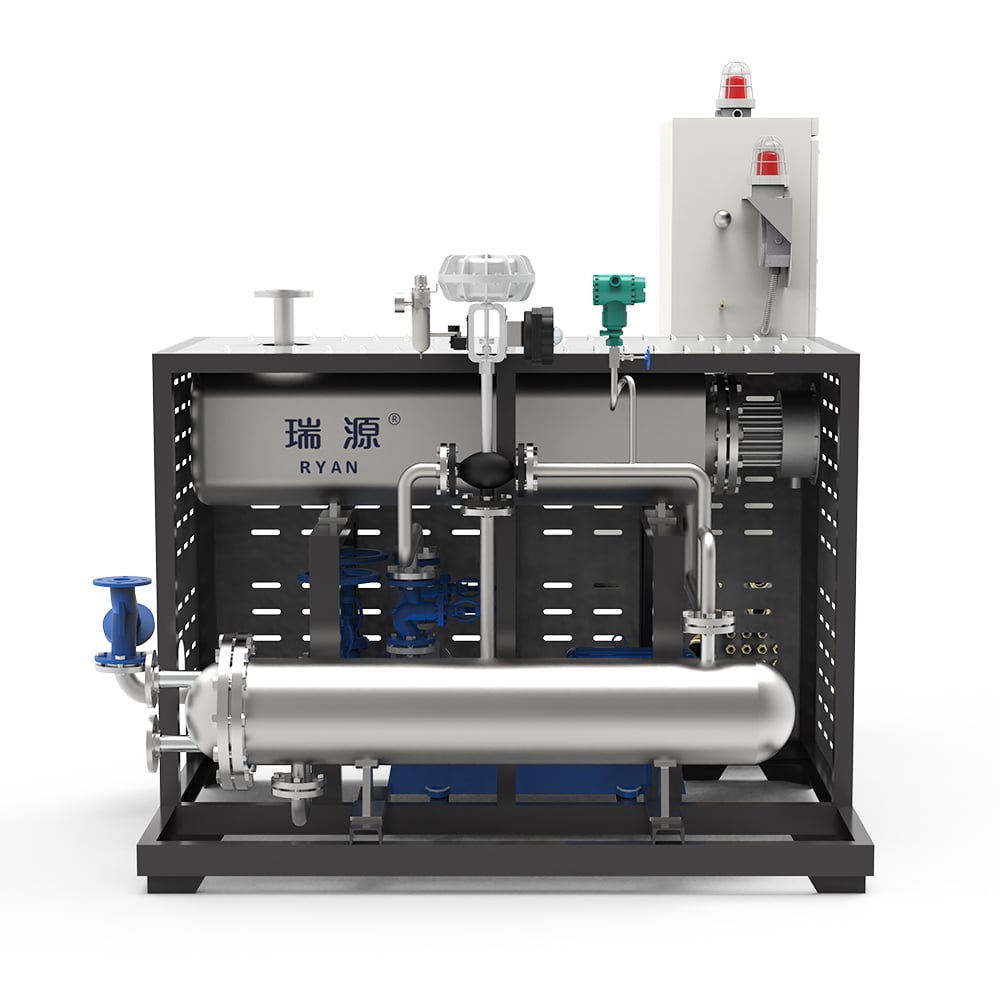
How They Work
The operation relies on a temperature difference. Heat flows from hot to cold. The fluids do not mix. They are separated by a solid wall. This wall is often metal. It must conduct heat well.
The rate of heat transfer depends on:
- Temperature difference.
- Surface area.
- Wall material.
- Flow arrangement.
Common Flow Arrangements
Flow arrangement affects performance. There are three main types.
Counter-flow is the most efficient. Hot and cold fluids move in opposite directions. This maintains a constant driving force.
Parallel-flow has fluids moving in the same direction. Temperatures equalize quickly. This is less efficient but useful for certain viscosity constraints.
Cross-flow has fluids moving at right angles. This is common in air-cooled systems.
Main Types of Heat Exchangers
Several designs are available. Each has advantages and limitations.
Shell and Tube
This type is robust and versatile. It handles high pressures. It suits liquid-to-liquid or gas-to-liquid duties. Maintenance is possible with straight tubes.
Plate and Frame
This design is compact and efficient. Plates create a large surface area. It handles low-pressure fluids. It is easy to clean and expand.
Air Cooled
These units use air as the cooling medium. They require no cooling water. This suits remote or water-scarce locations. They are often noisy and less efficient in hot weather.
Double Pipe
This is the simplest design. One pipe sits inside another. It is cheap and easy to maintain. It suits small capacities.
Selection Criteria
Choosing the right exchanger is critical. Consider these factors.
First, define the thermal duty. Calculate the required heat load.
Second, assess operating conditions. Check temperature, pressure, and flow rates.
Third, consider physical properties. Viscosity, corrosiveness, and fouling tendency are important.
Fourth, evaluate space and cost. Plate units are compact. Shell and tube units are more durable.
Finally, think about maintenance. Easy access reduces downtime.
Sonuç
Heat exchangers are vital equipment. Proper selection saves energy and cost. Understand the process requirements first. Then match the design to the duty. A well-chosen exchanger operates reliably for years.
For further problems about Heat exchangers, please contact our technical team for expert advice.
Whatsapp:86-19106101570
wechat:86-19106101570
email:fob@jsryan.com
 Chinese
  Russian
  Indonesian
  German
  French
  Italian
  Spanish
  Portuguese
  Polish
  Czech
Czech  Turkish
  Korean
  Japanese
  Arabic
  Persian
  Dutch
Dutch  English